Why 2026 is the biggest F1 reset in more than ten years, especially for American fans
Formula 1 is getting ready for 2026 F1 cars with the biggest set of new rules since the hybrid era started in 2014. For fans in the USA, which is now one of the sport’s fastest-growing audiences thanks to Netflix’s Drive to Survive, the Miami and Las Vegas GPs, and Cadillac’s entry, these changes promise closer racing, more overtakes, and technology that could affect future American EVs and performance cars.
The FIA and F1 wanted:
Cars that are smaller, lighter, and more agile, with about half of them powered by ICE and half by electricity
Fuels that are 100% sustainable
No DRS means a new “Overtake Mode” and active aero.
Racing that is safer and more competitive
This guide goes over the most important changes, how they will affect performance, and predictions for the 2026 team and power unit based on testing data, driver line-ups, and commitments from manufacturers.
For more information on what’s going on in F1 right now, check out our review of the 2026 F1 season. For US track day EVs, see Top 10 Electric Sports Cars 2026 for US Drivers.
1. Changes to the Core 2026 Power Unit: The 50/50 Hybrid Revolution
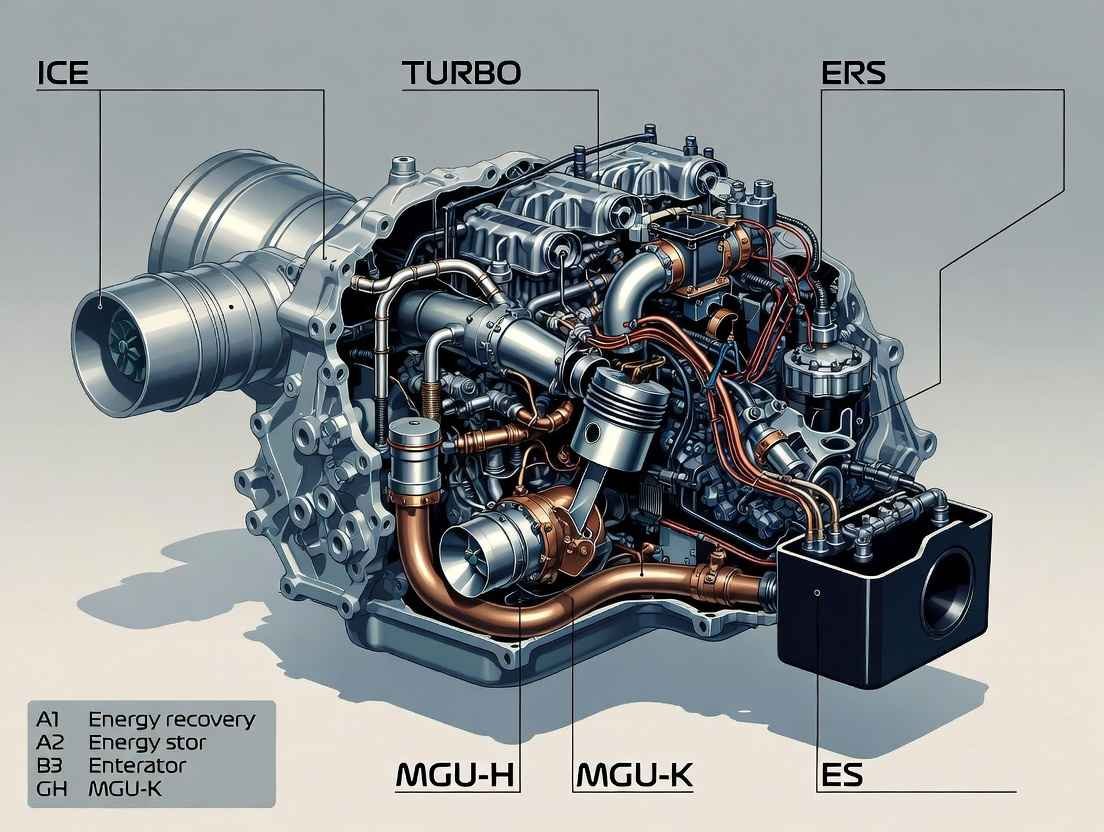
The biggest news is that power units are no longer mostly ICE but are now almost evenly split.
The engine is still a 1.6L turbo V6, but the ICE power drops from about 550–738 hp to about 400 kW (536 hp) because of fuel-flow limits and lower compression.
Electric boost: MGU-K goes from 120 kW to 350 kW (about 469 hp), which is almost a 300% increase. MGU-H is gone because it was too complicated and didn’t have anything to do with the road, which simplifies the hybrid system and focuses on more relevant technologies for consumer vehicles.
Energy per lap: The amount of energy recovered doubles to about 8.5–9 MJ/lap, up from about 4 MJ.
Fuel: 100% Advanced Sustainable Fuels (drop-in e-fuels made from carbon capture, waste, and non-food biomass). Goal: net-zero carbon.
Total output: about 1,000 hp combined, but delivery changes dramatically in the 2026 F1 cars.
Impact on racing: More electric deployment means that energy use needs to be planned. It’s not just DRS (Drag Reduction System) that helps you pass; it’s also your driving skills and battery tactics, which refer to the strategies used to manage and optimise battery energy during a race. Cars may feel “torquier” in the middle of a turn, but they lose speed at the top end of a straight line if they don’t use energy perfectly.
From the US point of view, sustainable fuels are in line with EV trends in Texas and California, as they aim to reduce emissions and promote cleaner energy sources alongside the growing adoption of electric vehicles. Cadillac (GM) joins as a PU (power unit) supplier in 2029. Corvette hybrids could incorporate early technology.
2. Chassis and Aero Revolution—Nimble Cars, Active Aero, and No DRS
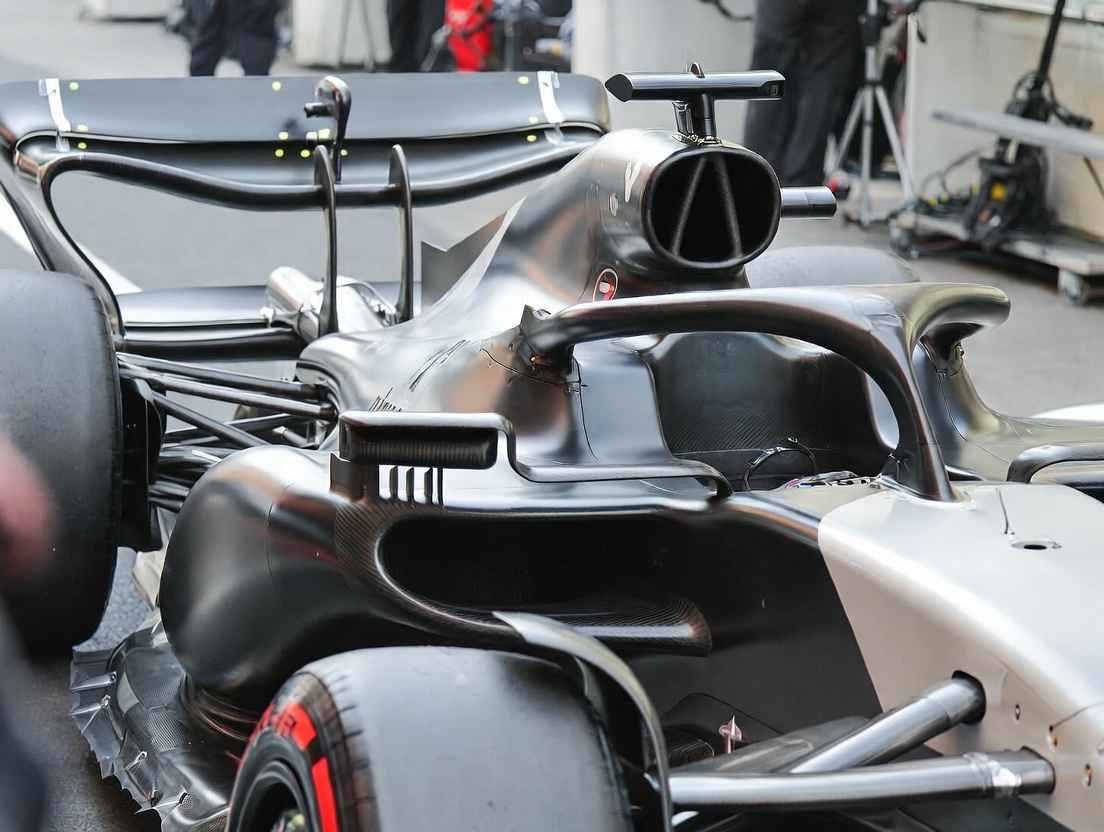
Cars are redesigned for agility and closer racing in the 2026 F1 cars.
The wheelbase is down 200 mm to 3,400 mm, the width is down 100 mm to 1,900 mm, the floor is narrower, and the weight is down 30 kg to about 768 kg.
Downforce and drag: About 30% less downforce and 55% less drag. This means that the car goes slower around corners but faster on straightaways.
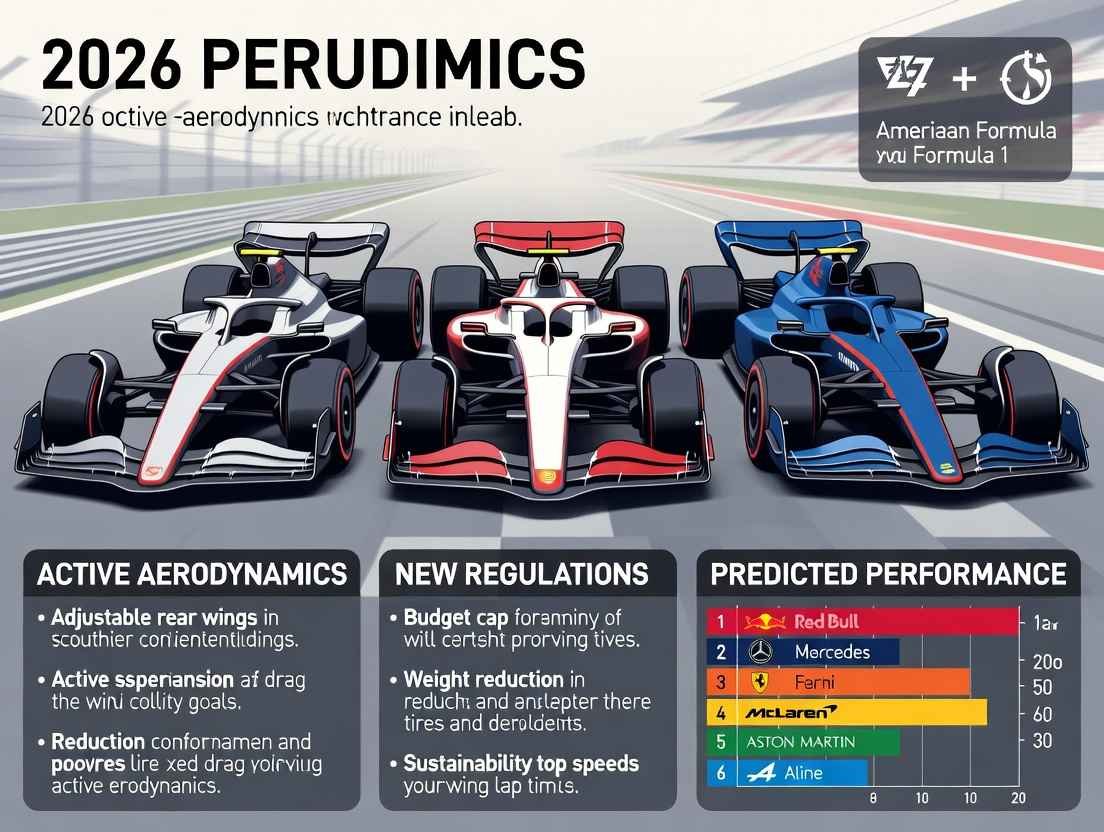
Active aero: The front and rear wings can move (Z-mode for low drag on straight roads and X-mode for high downforce in corners). “When you’re less than a second behind, “Overtake Mode” uses more electric power and aerodynamics.
Tires: Smaller 16-inch fronts and backs that are narrower for less grip, which means more sliding and more passing.
Safety: Better roll hoop upgrades and stronger side intrusion protection.
Impact: Cars are easier to follow (less dirty air), and there is more wheel-to-wheel action. Drivers need to be able to handle energy and aero modes, which is like managing KERS in 2009 but on a bigger scale.
In the US, smaller cars work better on tighter tracks like COTA and Miami. Active aero could lead to new technology for road cars, like active spoilers on the Corvette.
3. Team and Power Unit Rankings for 2026: Early Favourites and Surprises
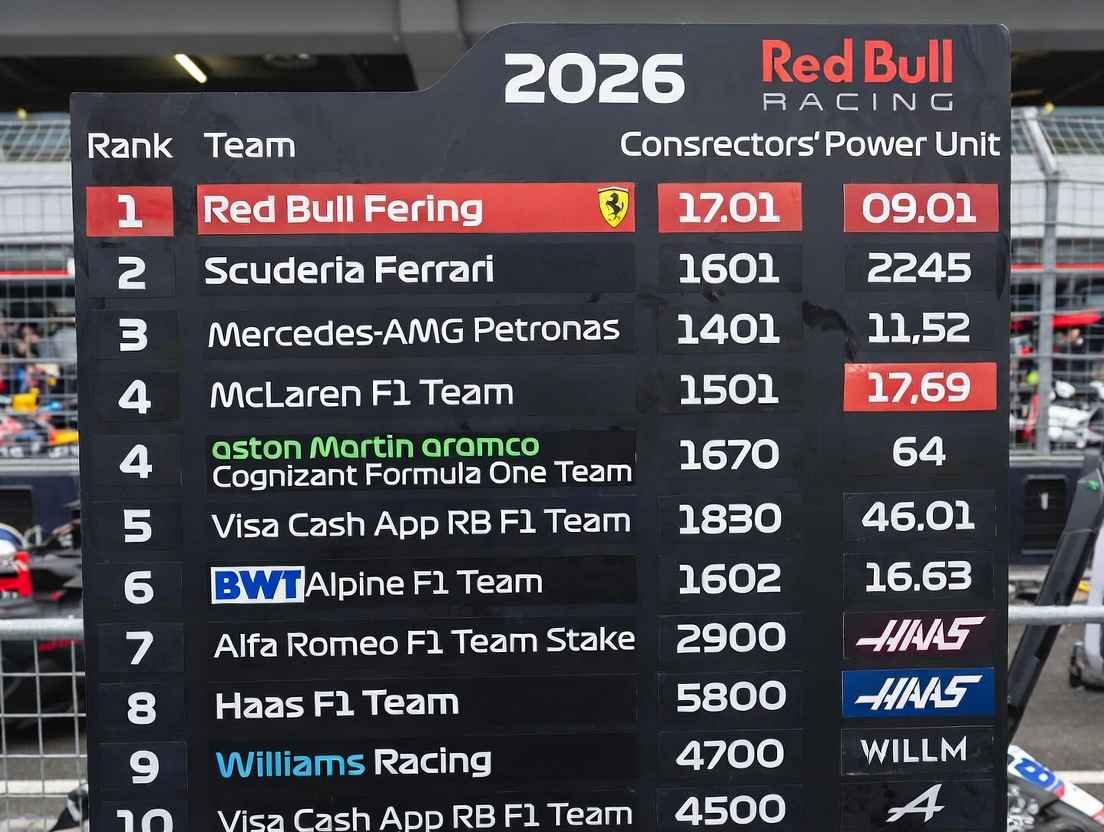
Pre-season testing, driver changes, and the strengths of the PU manufacturer all give clues. Note: How well it works in real life depends on how well it is developed, how reliable it is, and how well it is aerodynamically executed.
Top Tier (Contenders for the Title)
Mercedes is the best choice in many tests. They have a strong ICE heritage and a new hybrid balance that works for them. Russell and Antonelli are on the same team. WCC favourite that was predicted.
Hamilton and Leclerc make up the dream team for Ferrari. The Ferrari PU (power unit) has always been good at being efficient. Could be the best if they get the aero right.
McLaren has Norris and Piastri locked in. Great momentum from 2025 continues. The Mercedes PU helps.
Red Bull (Red Bull Powertrains + Ford) has Verstappen and Hadjar. New in-house PU is risky, but Ford tech is strong. Could win races but not always win the title.
Battle in the Middle
5. Alonso and Stroll in an Aston Martin. Honda PU back (strong history). Could be a surprise if the aero works.
6. Williams—Sainz and Albon. New wind tunnel investment and Mercedes PU.
7. Alpine: Gasly and Colapinto. Renault PU is still good, and they have young talent.
8. Haas: Ocon and Bearman. The Ferrari PU is reliable, and the US team is appealing.
9. Lawson and Lindblad are racing bulls. The Red Bull junior Program is strong.
Newbies / Lower Tier
10. Audi—Hulkenberg and Bortoleto. The new PU is risky because it’s still being built.
11. Cadillac (Andretti) – Perez and Bottas. GM PU from 2029; the first year is hard.
Cadillac’s entry is a big deal for American fans. Check out the Miami and Las Vegas GPs. New rules could make passing really exciting there.
4. How these changes affect F1 fans in the US and how they watch the race
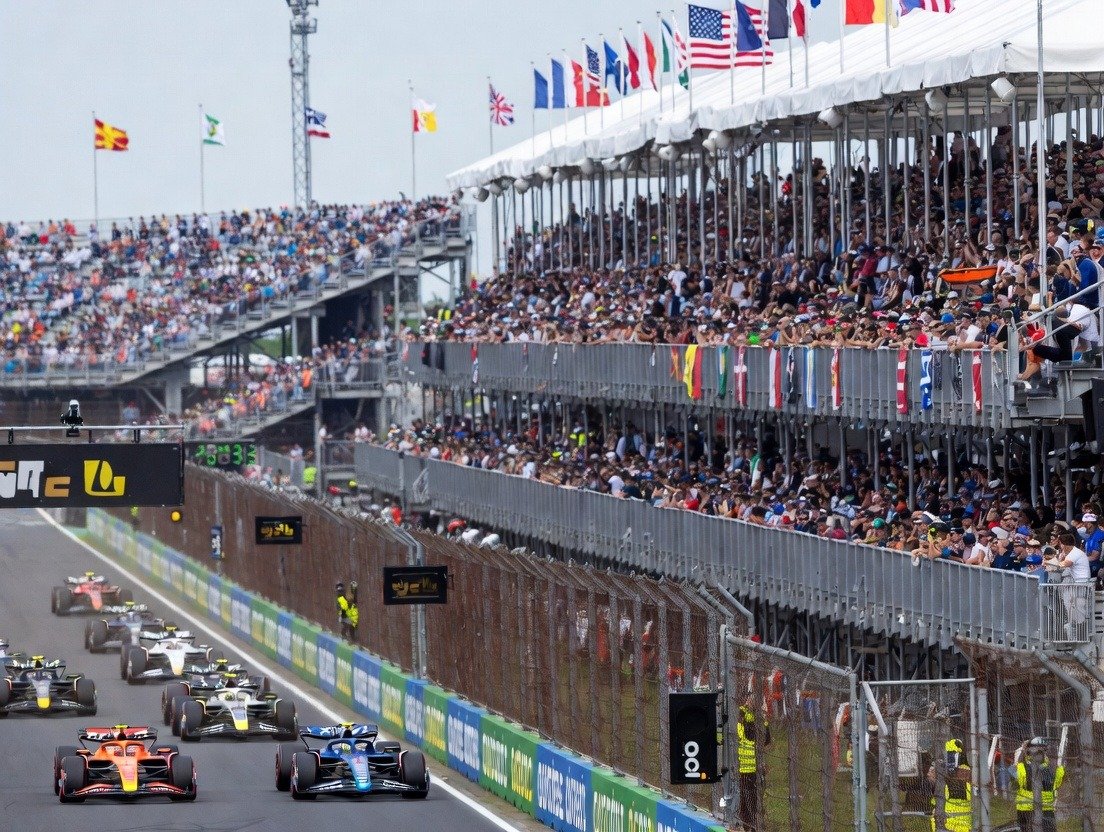
More overtakes: No DRS, active aero, and energy battles make racing on US streets more exciting.
Push for sustainability: fits with the US EV boom—great for new fans.
Driver drama: Hamilton at Ferrari and Verstappen vs. new challengers are huge stories.
COTA, Miami, and Vegas benefit from nimble cars and more places to pass in US races.
The Final Verdict: 2026 Could Be the Most Exciting Season of F1
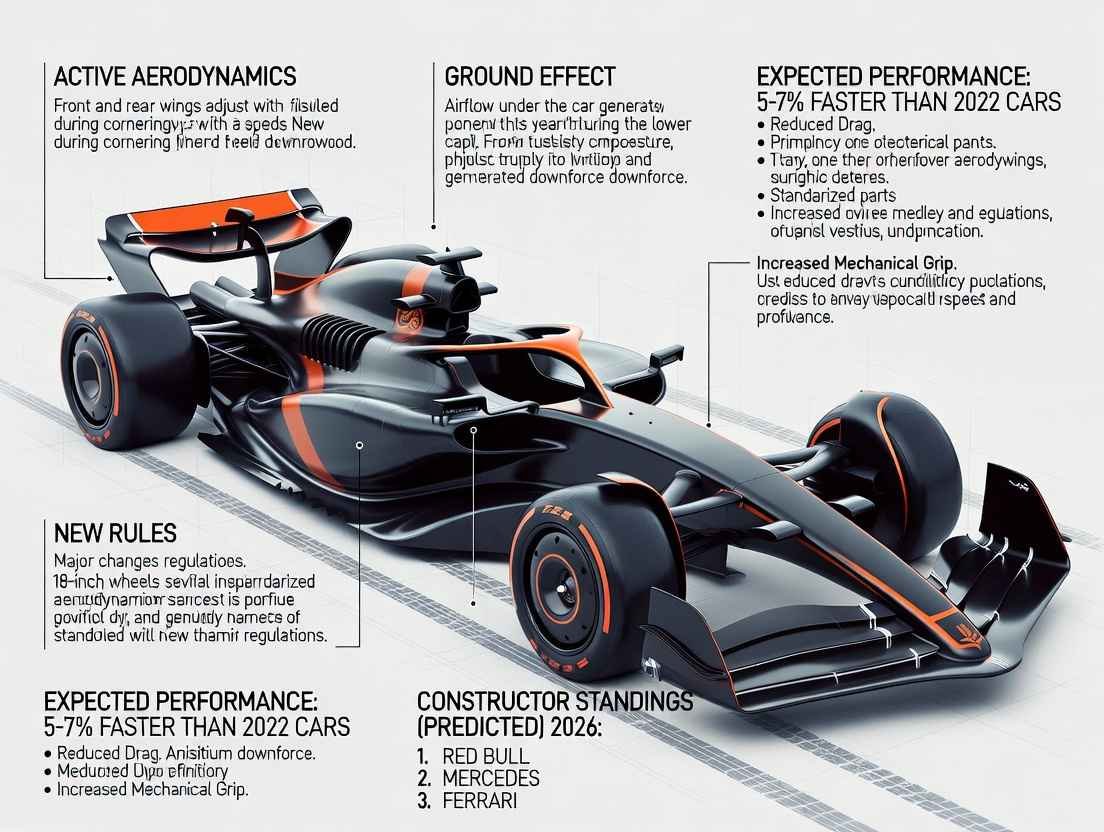
The 2026 rules reset promises tighter grids, more strategic depth, and technology that is useful on the road. Mercedes and Ferrari look like the best teams on paper, but McLaren, Red Bull-Ford, or even Cadillac could surprise everyone.
This is your time, USA fans. F1 is easier to get into than ever because of more overtakes, American teams and drivers, and technology related to electric vehicles.
Which team or driver do you support in 2026? Put your thoughts down below!