The engine, or power unit, is what makes every loud F1 car go. Formula 1 racing is the best kind of motorsport. The F1 racing car engine isn’t just any motor; it’s a masterpiece of engineering… Formula 1 power unit. The F1 racing car engine is a unique engineering marvel, combining extreme power, remarkable efficiency, and the latest hybrid technology. This in-depth guide will cover everything you need to know about the F1 racing car engine, from its current specs to the significant changes that will happen in 2026 and beyond.
This article explains everything you need to know about F1 cars, whether you’re a die-hard fan in the US or just curious about how they can go over 200 mph.
What is the engine of an F1 racing car? (Power Unit Basics)
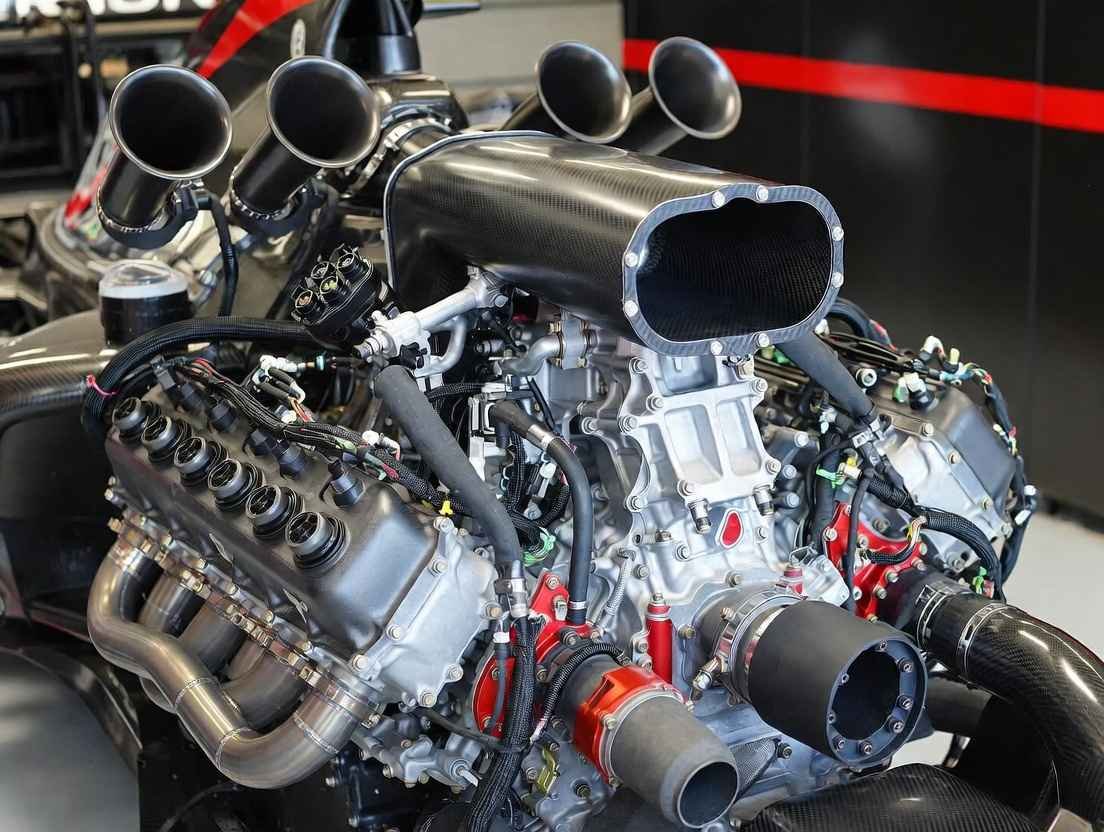
Since 2014, the word “engine” in modern Formula One has changed to “power unit“. This is because the engine in an F1 racing car is a hybrid system, not a simple internal combustion engine (ICE) like most cars on the road.
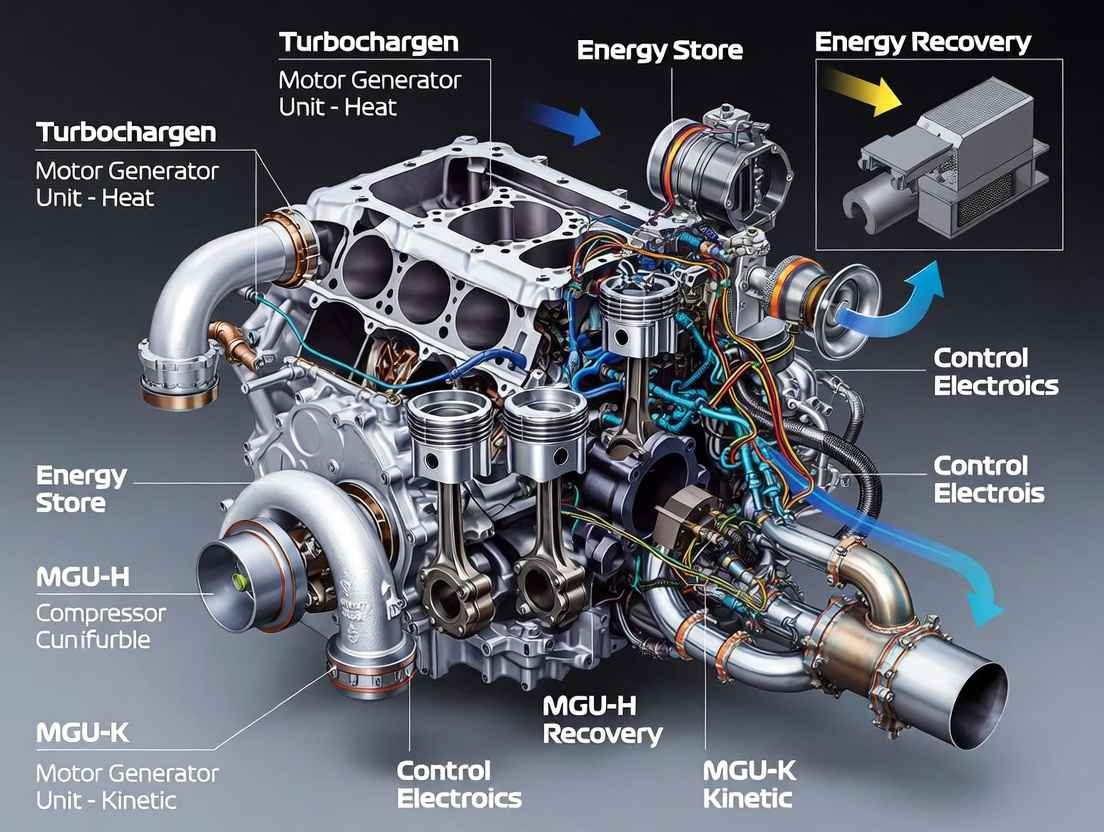
The current F1 power unit (before 2026) is made up of:
ICE stands for “internal combustion engine”, which is a 1.6-liter turbocharged V6.
Turbocharger (TC): Increases the amount of air that gets into the engine to give it more power.
Motor Generator Unit—Kinetic (MGU-K): This unit recovers energy from braking and adds an electric boost of up to 120 kW (about 160 hp).
Motor Generator Unit—Heat (MGU-H): Uses exhaust gases to spin the turbo and cut down on lag.
Energy Store (ES): A lithium-ion battery that keeps the energy that has been recovered.
Control Electronics (CE): The brain that runs everything.
When combined, these give off about 1,000 horsepower (some say more than 1,000 hp in qualifying modes), with about 80–85% coming from the ICE and the rest coming from hybrid systems. The F1 racing car engine can only go up to 15,000 rpm (since 2014) and makes a high-pitched scream that is famous in the sport.
Important Specs for F1 Engines Right Now (2022–2025 Frozen Era)
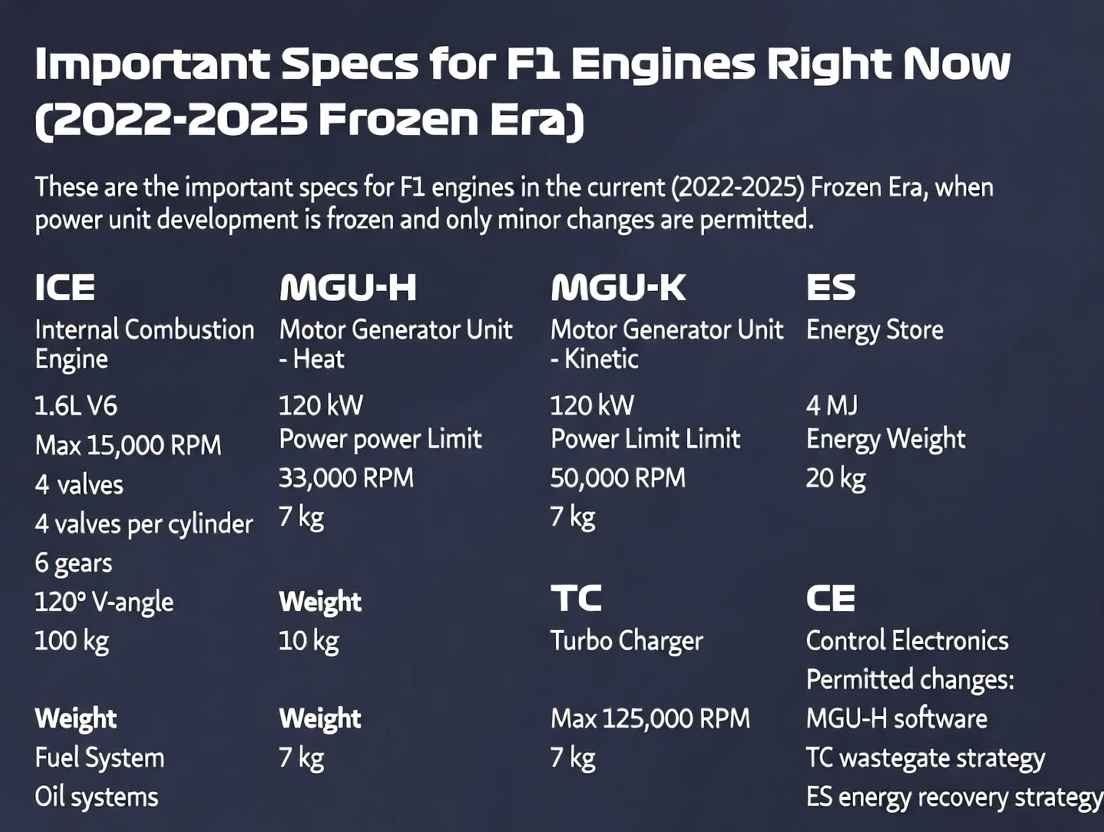
Type of engine: V6 turbocharged at 90 degrees
Displacement: 1.6 litres (1,600 cc)
Bore and stroke: 80 mm x 53 mm
15,000 RPM at most
Limit on fuel flow: about 100 kg/h
Power: about 840 hp from the ICE and about 160 hp from the MGU-K, for a total of more than 1,000 hp.
About 100 to 110 kilograms of fuel are used per race.
10% of the fuel blend is sustainable (this amount will grow over time).
These specifications were established from 2022 to 2023 to prevent the development of expensive arms races.
How does the engine of an F1 racing car make so much power?
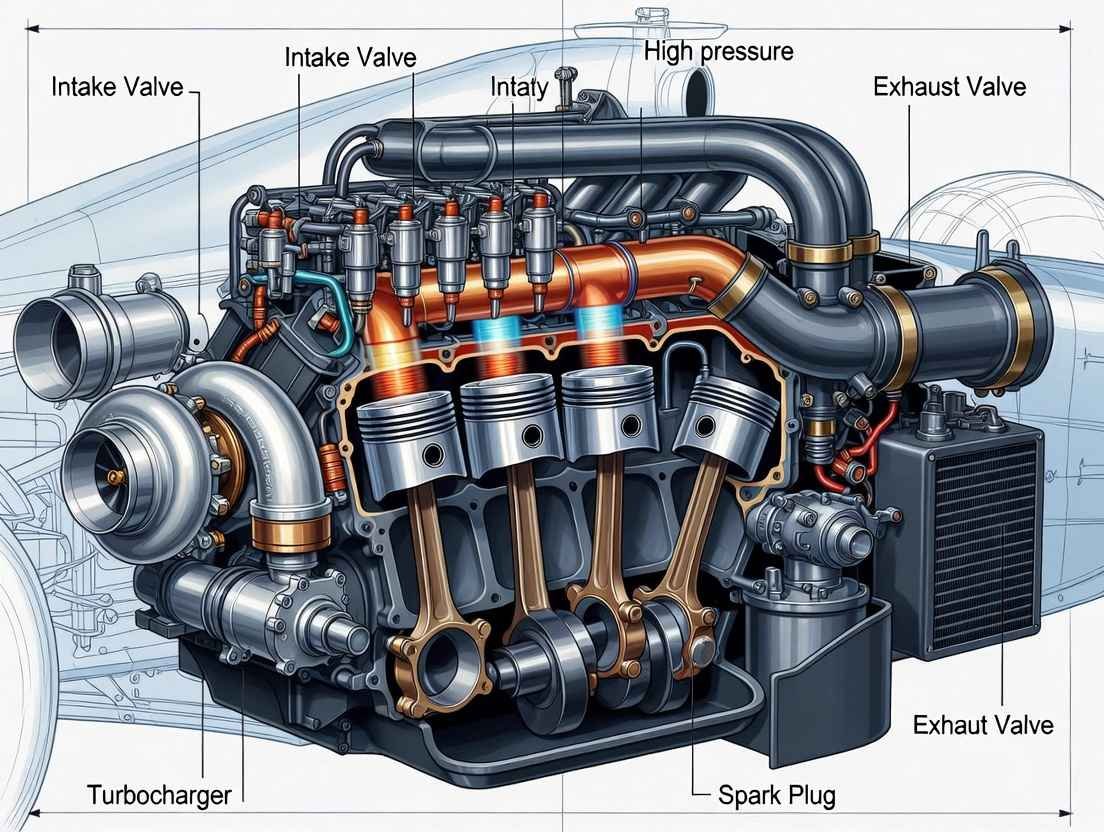
A regular 1.6-litre turbo engine in a car on the road, like a Ford Focus ST, can make 200 to 300 hp. An F1 racing car engine makes five times as much power from the same size. How?
Extreme RPM and Materials: Parts can spin at crazy speeds without breaking because they are made of light materials like titanium, carbon fibre, and exotic alloys.
Turbocharging and hybrid boost work together. The turbo pushes a lot of air in, and the MGU-H keeps it spinning even when you let off the gas.
Precision Engineering—Tolerances are tiny, and fuel is injected at pressures of over 500 bar.
Energy Recovery: Instead of being wasted, braking and exhaust heat are turned back into power.
No Limits on Efficiency: F1 teams push thermal efficiency past 50% (road cars are around 30–40%).
The end result? A small engine that works better in races and is faster than supercars.
How F1 engines have changed over time: From V10 Screams to Hybrid Power
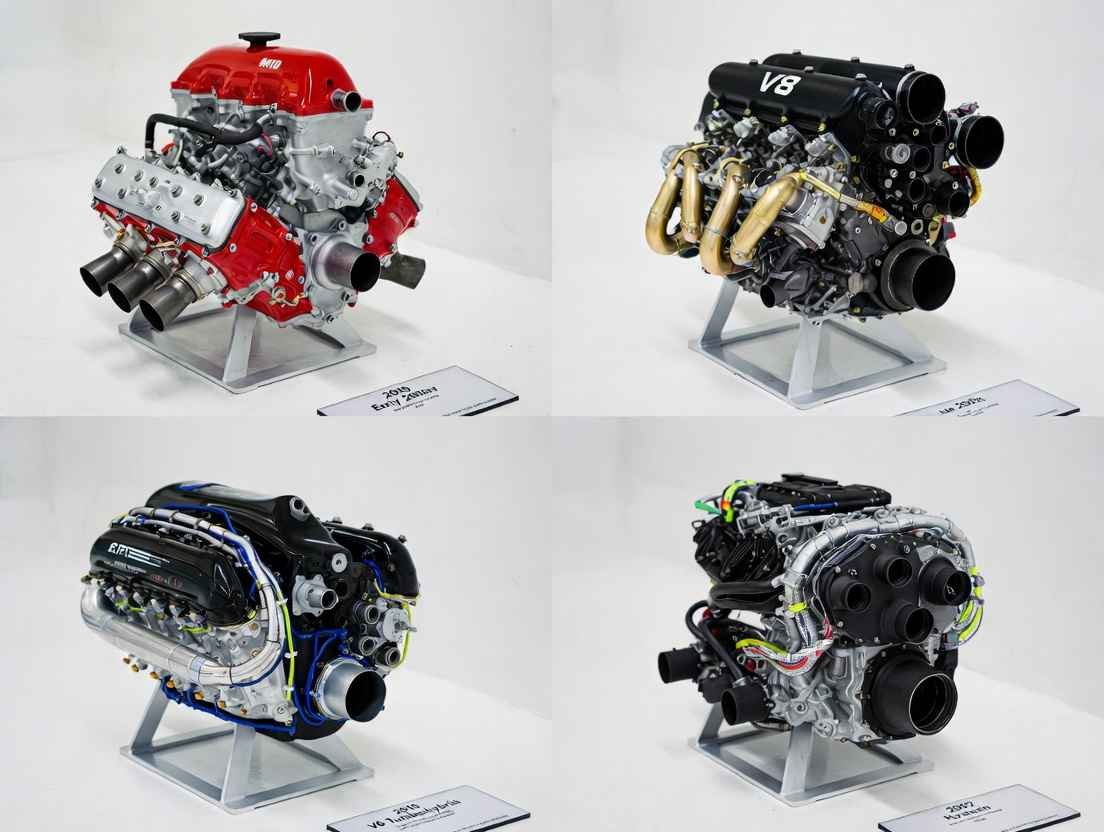
F1 engines have changed a lot:
1950s and 1960s: Naturally aspirated front engine.
Turbo Era of the 1980s: 1.5L turbos made more than 1,000 hp in qualifying.
V10 and V8 naturally aspirated engines reached 20,000 rpm in the 1990s and 2000s.
2014 Onwards: 1.6L V6 turbo hybrids were added for efficiency and to make them more useful for road cars.
There was a lot of debate about the change in 2014 (it made the cars quieter and more complicated), but it made F1 racing car engines the most efficient combustion engines ever made.
The Big 2026 Revolution: How Will F1 Racing Car Engines Change?
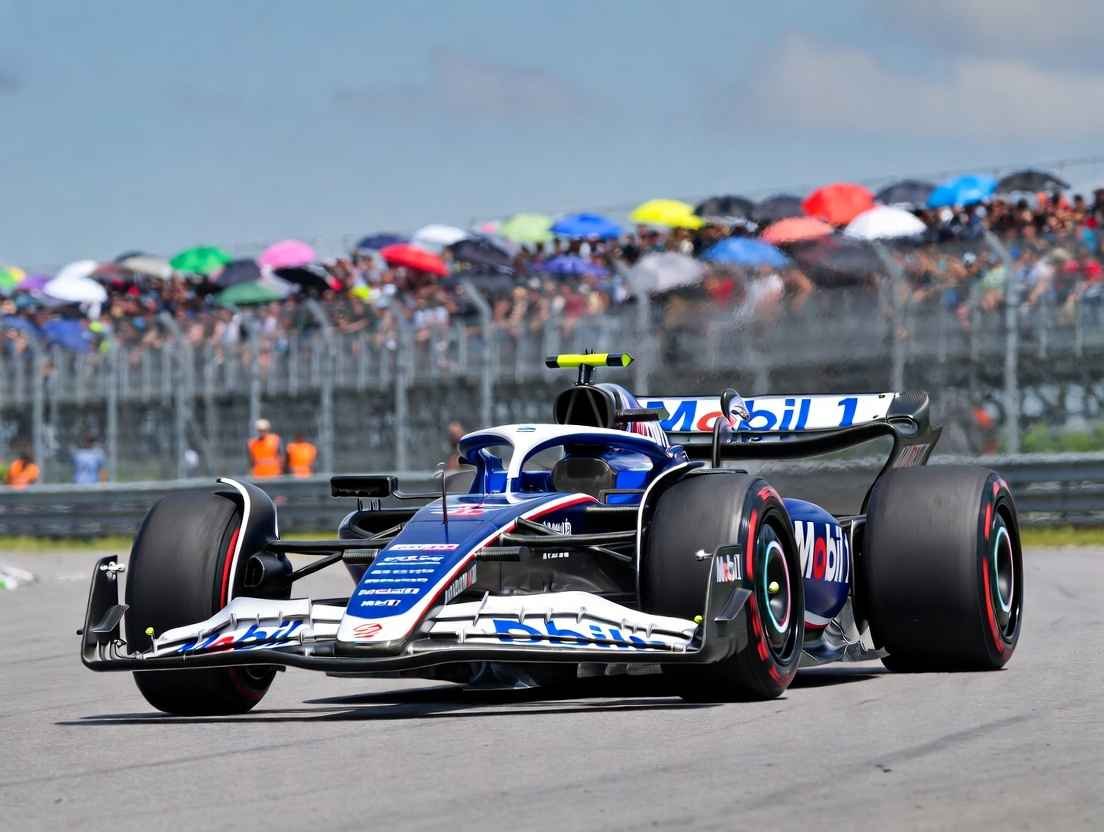
As of the 2026 season, Formula 1 has made significant changes to the power units to make them more environmentally friendly and useful on the road. In 2026, the F1 racing car engine is still a 1.6L V6 turbo, but there are significant changes:
Important Changes to the Power Unit in 2026
50/50 Power Split: ICE now has about 400 kW (about 540 hp), and electric has about 350 kW (about 470 hp). This adds up to more than 1,000 hp.
Deleted MGU-H: makes design easier and lowers costs.
MGU-K Upped—The power increased from 120 kW to 350 kW, which is three times as much, and the electric boost allows for more overtaking.
Advanced Sustainable Fuels (100%) are drop-in fuels that come from sources apart from food and don’t add to carbon emissions.
Fuel Limit: Now only about 70 kg per race (down from 100 kg), which makes things more efficient.
The compression ratio cannot exceed 16:1, following recent changes to ensure the measurement is fair.
Now there are five manufacturers: Ferrari, Mercedes, Honda, Audi, and Red Bull Powertrains (with Ford).
These changes make F1 racing car engines more like hybrids and electric cars, which will be on the road in the future while still maintaining excitement.
Engine Makers and Teams in 2026
Ferrari—Powers Ferrari, Haas, and Cadillac (a new team).
Mercedes powers Mercedes, McLaren, Williams, and Aston Martin.
Honda gives power to Alpine, which is coming back strong.
Audi is now the works team for Sauber.
Red Bull Powertrains/Ford gives power to Red Bull, RB, and maybe other companies.
This rise in competition could lead to epic fights.
F1 Racing Car Engine vs. Road Car Engine: Shocking Differences
| Feature | F1 Racing Car Engine (2026) | Typical Road Car Engine |
|---|---|---|
| Displacement | 1.6L V6 Turbo | 2.0L-5.0L various |
| Power | 1,000+ hp | 200-600 hp |
| RPM Limit | 15,000 rpm | 6,000-8,000 rpm |
| Cost | $10-15 million per unit | $5,000-$20,000 |
| Lifespan | ~Few races (limited components) | 100,000+ miles |
| Efficiency | >50% thermal | 30-40% |
| Fuel | 100% sustainable | Gasoline/diesel/hybrid |
Why the engines of F1 racing cars are important for the future
F1 pushes technology that trickles down to road cars, like hybrid systems, sustainable fuels, and turbo efficiency. The rules for 2026 make the engines in F1 racing cars more useful for the future of electric and hybrid cars.
Last Thoughts on the Engine of an F1 Racing Car
The engine in an F1 racing car is more than just metal and fuel; it’s what makes Formula 1 what it is. These power units are the most advanced in engineering, from the loud V6 hybrids of today to the 50/50 electric-boosted beasts of 2026.
Next time you watch a race on ESPN or F1 TV in the US, pay close attention. The sound of an F1 racing car engine is pure adrenaline.
What do you think about the changes that will happen in 2026? Please leave your thoughts below!