Hey, fans of motorsports!
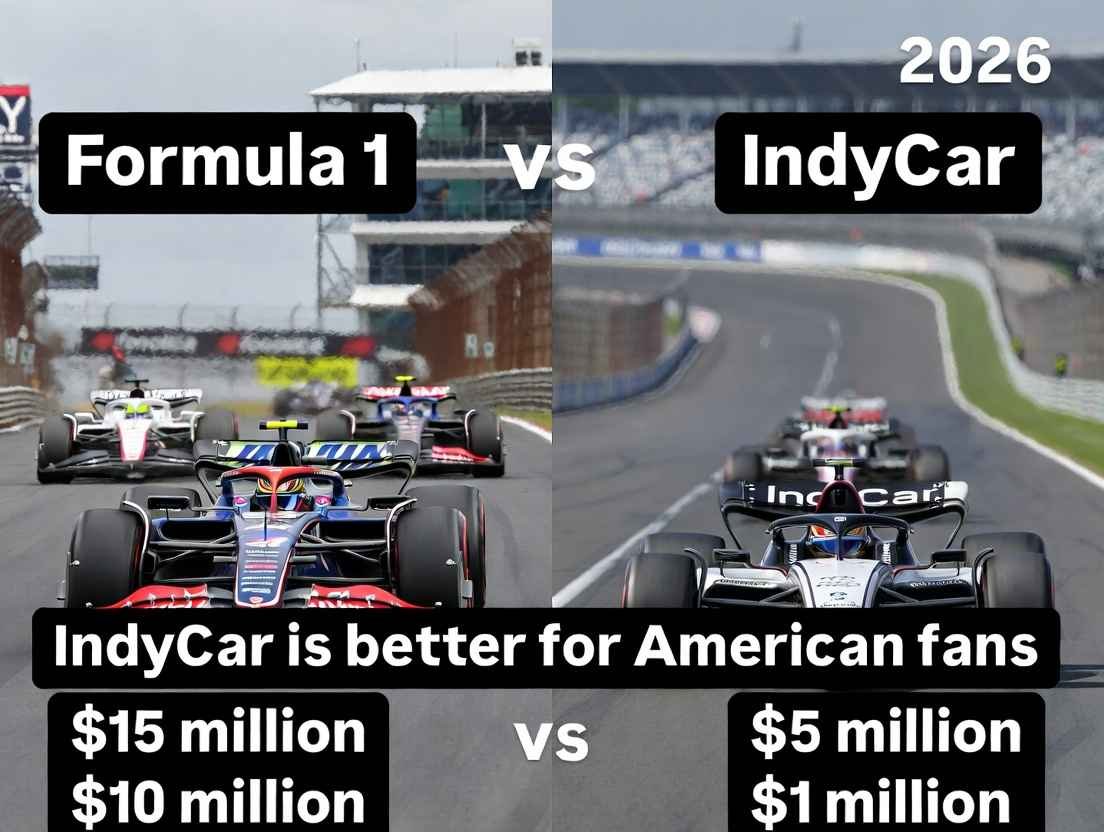
You’re not the only one who is trying to choose between Formula 1 vs IndyCar, especially as 2026 approaches. Both are top-tier open-wheel racing series with incredibly quick cars, world-class drivers, and huge followings around the world. But the style, technology, racing action, and vibe are very different.
F1 is the glamorous, high-tech global superstar. Think of the streets of Monaco, huge budgets, and famous drivers. IndyCar is the rough, American, heart-pounding alternative, with ovals that go over 230 mph, close-pack racing, and the famous Indy 500.
In this guide, we’ll talk about the real differences between Formula 1 and IndyCar in 2026, such as the cars, engines, tracks, schedules, costs, drivers, and more. By the end, you’ll know which one might be better for you as a fan of the USA. Let’s get started!
1. The Cars: Formula 1 vs IndyCar in terms of tech, speed, and design
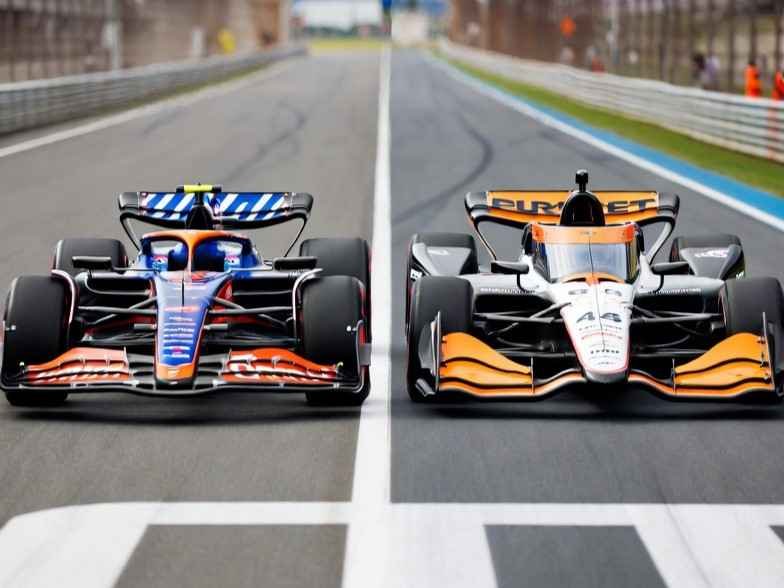
This is where the biggest difference is.
Formula 1 Cars (2026): There will be a big change to F1 cars. It has a shorter wheelbase (about 134 inches), a narrower body (about 75 inches), and it weighs less (about 1,700 pounds). The front and rear wings can change on demand to create less drag or more downforce. The split between ICE and electric in hybrid power units is now almost 50/50 (about 1,000+ total HP). Ground-effect floors have more downforce than anything else. Eleven teams build these cars from scratch, doing a lot of research and development and pushing the limits, which includes optimising aerodynamics, engine performance, and hybrid technology to enhance competitiveness in the series.
IndyCar Cars (2026): In this spec series, all teams use the same Dallara chassis, Firestone tires, and either Honda or Chevrolet 2.2L twin-turbo V6 engines with a small hybrid (about 800–850 HP total). The dimensions are still the same: the wheelbase is 117 to 121 inches, the width is 76 inches, and the weight is between 1,635 and 1,785 pounds, depending on the track. The cars have less downforce, more mechanical grip, and improved aerodynamics for oval tracks, reaching top speeds of 230+ mph at Indy.
The primary distinction lies in the fact that F1 cars are highly advanced technological marvels, manufactured by teams at a high cost. IndyCar cars are equalised for close racing and are cheaper and based on specs, which allows for a more level playing field among teams and drivers, promoting competitive racing. F1 is faster in corners on road courses because of aerodynamics. IndyCar goes faster on ovals.
2. The biggest difference is in the tracks and the way the race is run.
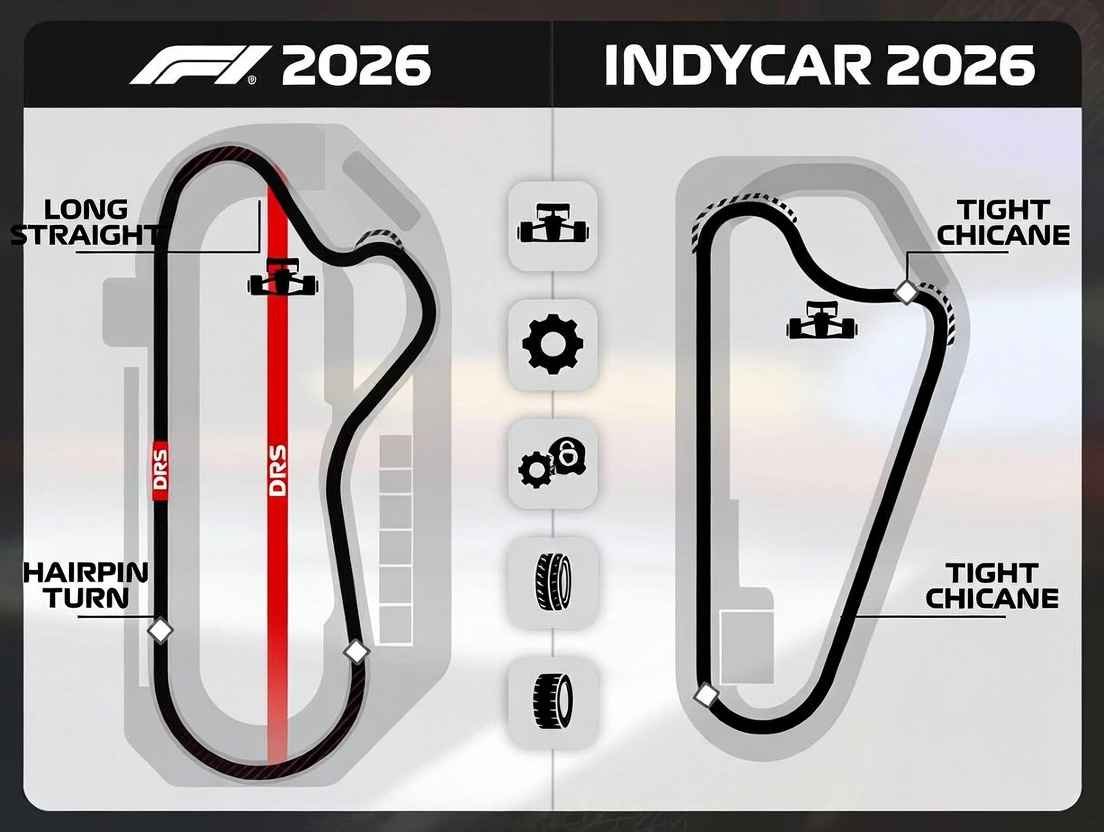
Formula 1: Most of the time, the races are on road and street circuits (like Monaco, Singapore, and Baku), but there are also some permanent tracks (like Silverstone and Spa). No ovals. Races last 305 km (or 2 hours) and focus on strategy, managing tires, and DRS overtakes. Lap times are very fast on twisty tracks, but not so much if the tires don’t wear out.
IndyCar: a mix of everything, like street courses (Long Beach, Detroit), road courses (Road America), and high-speed ovals (Indy, Iowa, Gateway). There are lap-based races ranging from 200 to 500 laps, intense pack racing on ovals characterised by drafting and restart chaos, and intense side-by-side competition. The Indy 500 is the best race of all time. It has 200 laps and 500 miles.
IndyCar feels more “American” to USA fans because it has ovals, is easier to get to, and is less predictable. F1 has three races in the US (Miami, Austin, and Las Vegas), but it feels far away because it is focused on the rest of the world.
3. Drivers and teams: salaries and talent pool
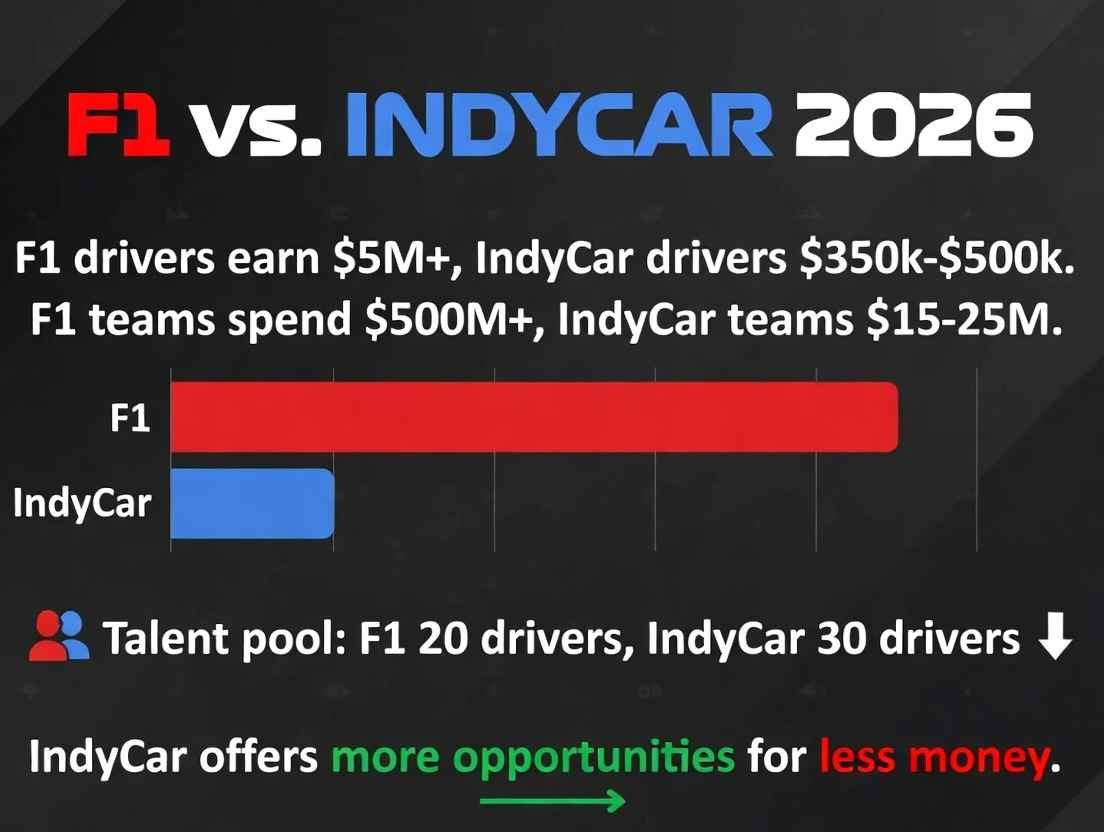
There are 22 drivers in Formula 1 (11 teams with 2 drivers each). Verstappen, Leclerc, Hamilton (if he’s still racing), and Norris are all stars. Big salaries—top drivers make $20 million to $50 million a year, plus bonuses. Tech is ruled by teams like Mercedes, Ferrari, and Red Bull.
IndyCar has about 27 full-time drivers, and each team runs two to three cars. Alex Palou (four-time champion), Scott Dixon (a legend), Josef Newgarden, and Pato O’Ward are all stars. Top guys make $1–5 million, and sponsorships are a big part of that. More fairness: any team can win.
Crossover: Drivers go from F1 to IndyCar (like Grosjean and Ericsson), but not very often the other way around. Mick Schumacher in IndyCar 2026 makes things more exciting.
4. Prices, availability, and fan experience
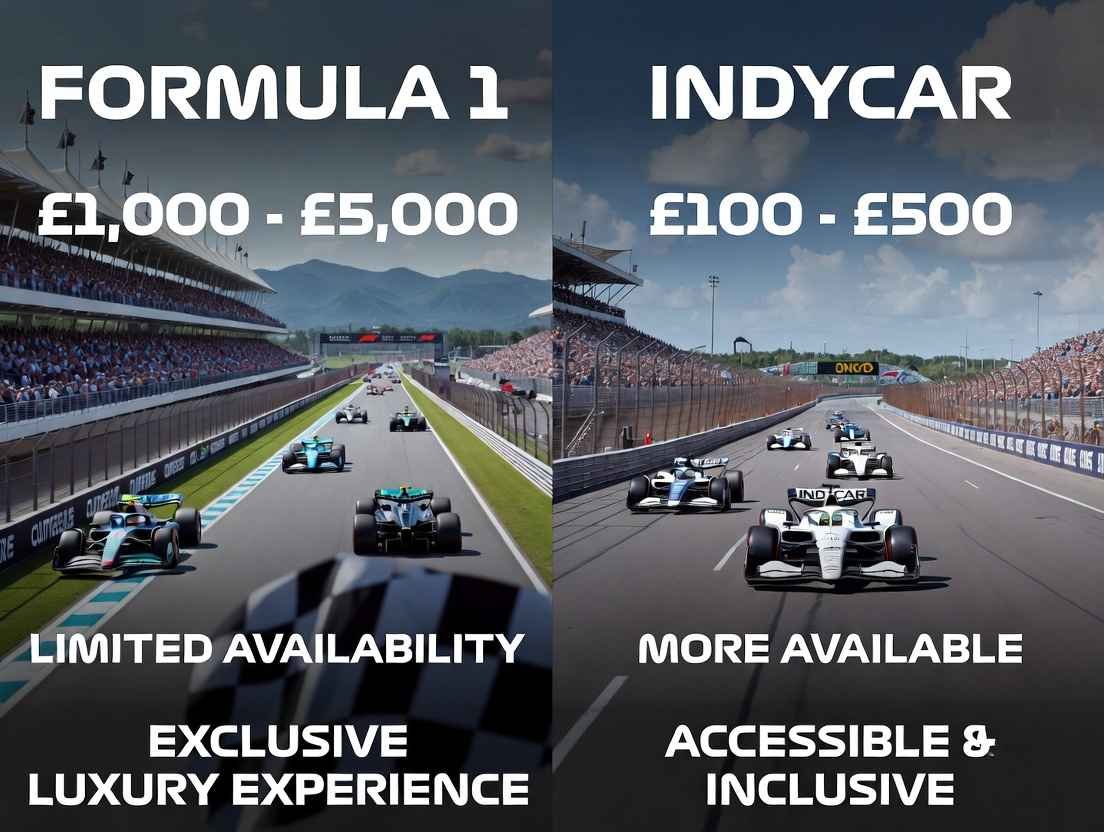
Formula 1 is crazy expensive. Teams have a budget cap of $400 million, but development costs billions. Tickets cost between $500 and $5,000 and include travel around the world. Netflix’s “Drive to Survive” became very popular in the US.
IndyCar: Costs a lot less—team budgets are between $7 and $14 million. Tickets cost $50 to $300, and it’s easier to get in. Races on FOX (USA) have a more family-friendly feel.
From the US point of view, IndyCar is cheaper to go to and watch, and ovals are exciting. F1 is glamorous but expensive.
5. Changes in 2026 and the Future: Formula 1 vs IndyCar
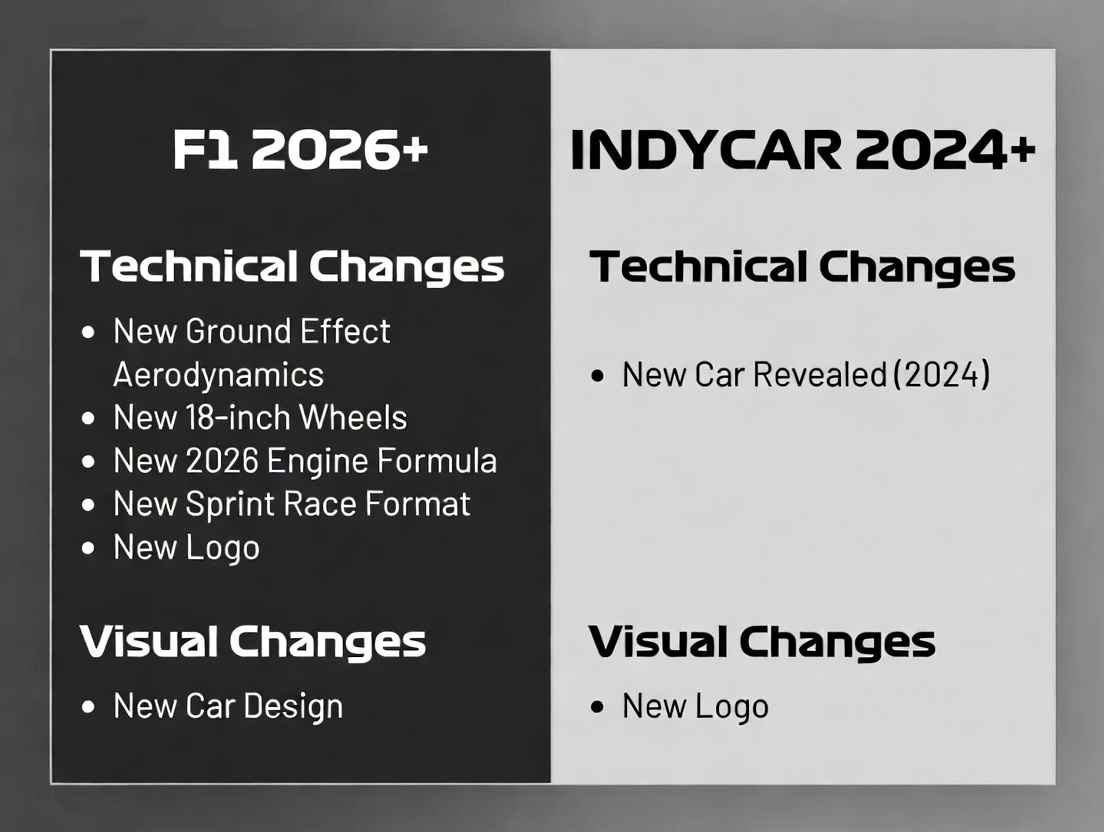
F1 2026: Smaller and lighter cars, active aerodynamics, and more electric power will make the races closer.
IndyCar 2026: Rules that don’t change, hybrid changes, and a focus on fairness.
Which is Better?
No clear winner; it all depends on you!
Want technology, style, and races around the world? → Formula 1.
Want close racing, ovals, and an American vibe? → IndyCar.
A lot of American fans like both F1 for its prestige and IndyCar for its raw racing.
Final Thoughts
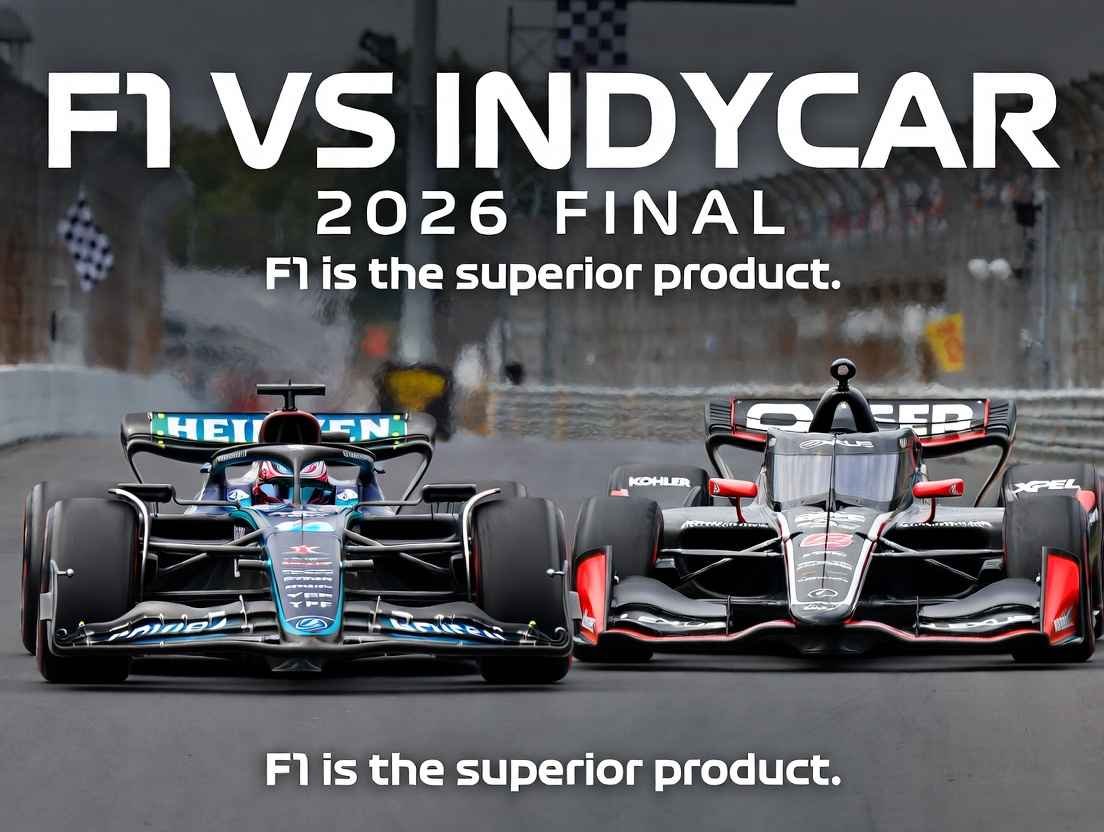
Formula 1 and IndyCar are different in their philosophies: F1 is about new ideas and a global show, while IndyCar is about equality and heart-pounding action. In 2026, both will be exciting: F1 with new rules and IndyCar with ovals and close races.
Which one do you like better? Leave a comment with your thoughts: are you a fan of F1 or IndyCar? Let’s talk about it! 🏎️💨